 |
| Gnocchi alla romana - a bit different from the classic gnocchi, even in looks! |
These small doughy balls known as gnocchi in Italian and as ñoquis in Argentina, are generally made from potato but there are many other varieties that are just as delicious as the traditional potato ones.
To celebrate this special day in our culinary calendar, I invited bloggers Katie, Ana, Rebecca, Meag and Paula to come up with their special version of the ñoquis for this 29th March. The idea is to share our recipes and have new options for the 29th of the months still to come. We will find out what delicious recipes these ladies have prepared for this special holiday in a moment....
But first, why is the 29th Gnocchi Day in Argentina?
The truth is no one knows for certain and there are a number of theories to explain this tradition, like that it was brought over to the New World by our Italian ancestors who celebrated St. Pantaleon every 29th in Italy by serving gnocchi on this day.
The most likely explanation, though, is that the 29th is the day right before payday and what better food is there to feed your family, that is cheap yet delicious and filling and is easy to make at the same time? The answer is ñoquis, of course!!
Serve them with a simple red or white sauce or just drizzle some olive oil and and put a sprinkle of parmesan on top and it becomes a dish that is rich and will leave you and your loved ones with full bellies and happy hearts. In fact, that is what you say, before eating the ñoquis - but wait! let's explain how it should be done:
First, make your ñoquis and serve them with your favourite sauce. Then place a folded bank note under each plate to attract prosperity to your house and your dear ones. Take your napkin and tie it around your neck (ok, you can skip this one if you promise to mind your manners) and make a toast to a "full belly, happy heart" (in Spanish, "panza llena, corazón contento") and.... dig in!
A friend of mine who is originally from Uruguay (our neighbours from just across the Río de la Plata) told me that in her family, they normally count how many ñoquis each member has been served and later place bets on that number in the lottery! The idea is, do anything and everything you can to bring good luck and prosperity to yourself and your family!
Now, here is my idea for Gnocchi Day tomorrow:
Ñoquis a la Romana:
 |
| Gnocchi alla romana don't have the traditional gnocchi shape. |
Tomorrow I am going to be serving mine with sauté mushrooms, leek and paksoi. The idea for this combination came from an Argentinean food blogger, Cristina. You can see her recipe here.
They are a bit different from the gnocchi we are used to, they look more like disks than like little dough balls and the texture is different as well. My grandma used to make them when I was a little girl and I remember I used to love cutting the gnocchi in different shapes so that the dish ended up looking a bit strange in the end! Another thing I liked was that if there was any dough left, my grandma used to sprinkle a bit of parmesan and rosemary over the dough, cut it in little sticks and fry them to eat as snacks until the ñoquis (as we called them) were done.
Ingredients: (serves 4)
45g. unsalted butter, melted
30g Parmesan cheese, grated
3 egg yolks
1l. milk
pinch of nutmeg
200g semolina flour
salt, pepper to taste
For the topping:
40g butter, melted
90ml cream
30g Parmesan cheese, grated
Preparation:
Notes:
- Have all the ingredients ready beforehand, because the dough needs to be hot when you pace it on the baking sheet to set and cool.
- Seasoning is important, make sure you taste the dough is not too bland before you put it in the fridge to cool.
Line a shallow bread tin or dish with some greaseproof paper to have it ready when you are done with the mix.
Whisk the butter, Parmesan cheese and the egg yolks and season to taste. Set the mixture aside.
Heat the milk in a big pan. Add the nutmeg and season with salt and pepper. When the milk is just beginning to boil, add the semolina flour in a thin stream, little by little, whisking constantly - and I mean, constantly - you don't want lumps in the dough. Reduce the heat and let the mixture cook for about 8-10 minutes, stirring continually, until all the milk has been absorbed and the mixture comes loose from the sides of the pan. The texture has to be thick, but still creamy and moist.
Take the pan from the gas and whisk in the egg mixture you had previously set aside. Taste to correct seasoning if necessary. Spread the dough while still hot (very important, since this will make it easier to spread the dough) on the sheet to a thickness of about 2cm. Spread it as smoothly as you can, using the flat side of a knife or a metal spatula, dipping it first in cold water before touching the dough.
Cover with cling film and leave in the fridge to cool for a couple of hours. If you are not going to make the ñoquis right away, you can at this stage the dough overnight or freeze until needed.
 |
| To cut the gnocchi I used a cutter with a funny shape. They're ready to go into the oven now! |
 |
| Grate some Parmesan on top of the gnocchi and take it to the oven... |
For the topping, mix the butter and the cream. Pour this mixture onto the ñoquis and sprinkle generously some Parmesan cheese. Put the dish in the oven and bake the ñoquis for about 25-30 minutes until the top layer is golden brown. Once they are ready they should be served right away.
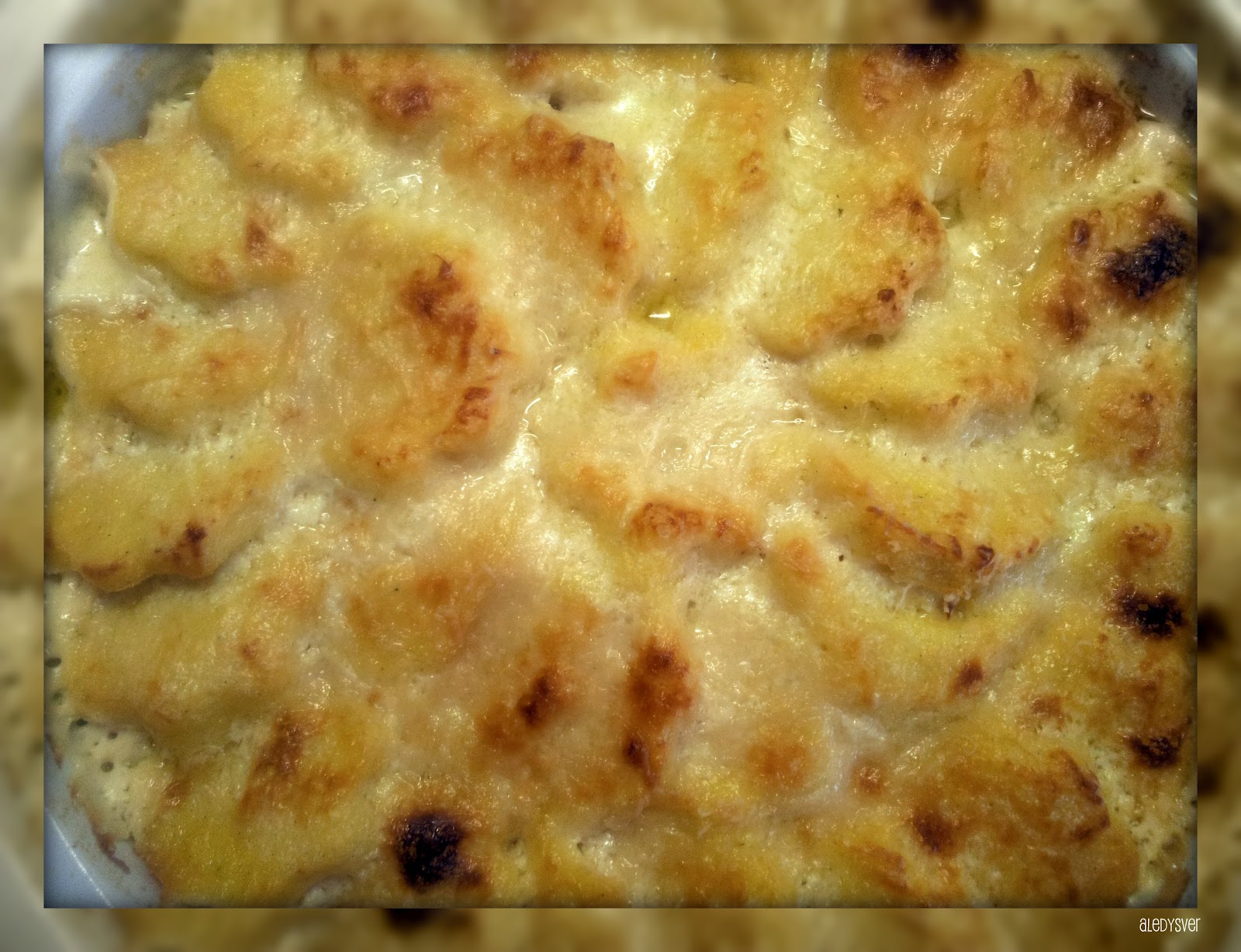 |
| Out of the oven, bubbling away... |
* * * * *
Let's now take a look at the other ladies' ñoquis recipes!
(you can go to their recipes by clicking on the link under the photo)
(you can go to their recipes by clicking on the link under the photo)
 |
| Spinach Gnocchi by Paula de Caro |
 |
| Arugula Gnocchi by Ana O'Reilly |
 |
| Butternut Squash Gnocchi - Two Ways by Katie |
 |
| Roasted Beet Gnocchi by Meag |
This should definitely see us through the next six months of full bellies and happy hearts, don't you think? (wink!)


 Posts
Posts


