Sunday, 19 June 2011

Spotted in Belgium: Kwak beer

(para leer este post en español, sigue este enlace)


Actually, I first spotted this beer here in the Netherlands - at the café/restaurant De Belgische Keizer (the Belgian Emperor) in Zwolle, to be more precise. But during our recent mini-vacation in the Ardennes in Belgium, we stopped at the tavern/restaurant Le Miroir (site in French and Dutch only) in Dochamps (province of Luxemburg) for dinner and when I saw that they had Pauwel Kwak beer, I couldn't resist the temptation to order one while we waited for our dinner.

Kwak beer is always served in glasses that have a very distinctive shape: they have a round bottom and look more like an hour-glass than like a traditional beer glass. The "hour-glass" is held upright in a wooden stand and the whole thing looks like a piece of scientific tool more fit to be displayed in a lab than in a bar. It is certainly quite original.


 I have had Kwak many times before but I never got round to finding more about the origin of this beer. This time as  soon as I came back from our holiday and started working on my vacation photos, I thought I would just do some research and see what I could find about it.


Back in Napoleon's times, Pauwel Kwak was a beer brewer and owner of an inn called "De Hoorn" (the horn) in Dendermonde, East Flanders. Every day the stage-coaches passing by would stop at the inn to take a break. In those days, the coachman was not allowed to leave the horses and the coach outside and join his passengers for a drink inside the inn, so Mr. Kwak, the owner of this particular inn came up with an idea.
He had a special Kwak glass made: round-bottomed, which could be hung from a wooden holder to prevent it from spilling the precious liquid. In this way, the thirsty coachman, could safely enjoy his Kwak beer without leaving his coach and the horses unattended.


Kwak beer is still today brewed and served in the traditional way: in the Kwak glass. But what about the taste? I do not know much about beers, but I can tell you that this one is delicious, like many other Belgian beers that I have tasted so far. To the eye it has a deep clear amber colour and a creamy thick foam. It also has a soft  fruity  and a malty aroma with a light herbal character. When you drink it, the taste starts with the fruit - maybe bananas or ananas... and it is sweet: it always makes me think of caramel. After you drink it, there is a light bitterness and spiciness that remains in the back of your tongue.


Pauwel Kwak is a traditional Belgian beer with a story behind it. Original and lekker (delicious) - definitely at the top of my list of favourite beers.

Friday, 10 June 2011

Visitng Zeeland II: The Oosterscheldekering or Eastern Scheldt storm surge barrier

(Si prefieres leer este post en español, sigue este enlace)
The piers and slides of the Eastern Scheldt barrier in the province of Zeeland.

With the official inauguration of the storm surge barrier in the Oosterschelde (the Eastern Scheldt river) on 4 October 1986, Queen Beatrix declared the Delta Plan works in the Netherlands completed. More than ten years later she did that again when she opened the last section of the Nieuwe Waterweg Dam on 10 May 1997. It doesn't matter how many times it needs to be said; one thing is for sure: The Netherlands has definitely tamed the power of the sea - or at least, that is what we like to hear from those who have in their charge the management and the overseeing of the dikes and dams in this country.

With 60% of its territory under the sea level, the Netherlands is world renowned for its Delta works - a series of construction projects designed to protect a large area of the Rhine-Meuse-Scheldt delta from the destructive power of the sea. Bearing these facts in mind when I moved to the Netherlands,  I thought that I had to pay a visit to the monumental sea barrier  and see for myself this ingenious work of engineering.

This is why the main purpose of our holiday in the southern province of Zeeland was to stop at the Oosterscheldekering or Eastern Scheldt Storm Surge Barrier - the most impressive storm surging structure in the Netherlands.

The Oosterschelde or Eastern Scheldt Storm Surge Barrier.
This is what the Oosterschelde Storm Surge Barrier looks like on Google Maps:


The construction of this sea barrier cost an impressive total amount of 2.5 billion euros; but even more impressive is what it is supposed to have achieved: thanks to this monumental barrier the chances of having a destructive flood like the one that the country suffered in 1953, have gone down to one in every ... 4.000 years!

Driving on the Oosterschelde barrier you can get a closer look at the piers and slides that make up the construction.

The alternative plans for the Oosterschelde: 
Initially, this section of the Eastern Scheldt delta was to be closed with a regular dam that would completely block the sea. But even though safety was the top priority, there were serious concerns about the consequences that this kind of barrier would have on the ecosystem of the delta. The alternative then, was to build a barrier consisting of piers with slides that were to be kept open, but which could be closed if there was any risk of flood.
The cost of executing this plan as it was originally intended would have been astronomical and therefore, after much discussion in Parliament, it was finally decided that the best alternative was to build two auxiliary dams (the Philips dam and the Oester dam) to reduce the surface of the open barrier and, at the same time, allow for a better control of the tidal movement. The new plan also included a tide-free shipping route between Antwerp and the Rhine.

Everything seem to be working properly when I "inspected" the Oosterschelde Storm Surge Barrier in 2008.

Nature in the Oosterschelde:
The sea/ landscape and wild life in the Oosterschelde is now quite unique with a rich variety of fish, water plants and algae. The reserve is also a favourite with an amazing number of birds that feed or hibernate on the land. All this wonderful natural environment would have been completely lost if the original plan to close the Eastern Scheldt had been carried out and also mussel and oyster farming would have been affected with disastrous economic conseequences for the entire region.
Fortunately, the alternative chosen for this amazing piece of engineering seems to have been a success; not only to keep the sea level under control, but also for the preservation of the natural habitat of hundreds of different species.

The Oosterschelde storm surge barrier is a must-see for anyone who wants to know what makes the Dutch people proud. Windmills, tulips, cheese and wooden shoes you can take back with you as souvenirs (you will find plenty of these at the Schiphol Duty Free shop and you can even order them online); but the water works and what they have done for the safety of the Dutch coast can only be truly appreciated in-situ. Open your eyes, take it in, enjoy ... and learn.

There is a fun way to get to know  more about the Delta Works and sea life in Zeeland: the Delta park Neeltje-Jan, built on an artificial island on the Oosterschelde offers exhibitions and educational activities together with fun attractions like a sealion theatre, a hurricane simulator and many, many more interesting things to do or see, making it is an ideal place to spend time with the children. On their website you can find all the information necessary to plan your visit.

A plaque placed at one of the ends of the barrier reads in Dutch:

"Hier gaan over het tij, de wind, de maan en wij."
(Here rule over the tide, the wind, the moon and us)

You may also like to read: The light breeze of Zeeland and Visiting Zeeland I: Middelburg.

Sunday, 15 May 2011

A Bread Pudding Tale: There and Back Again

 (si prefieres leer este post en español, haz clic aquí)

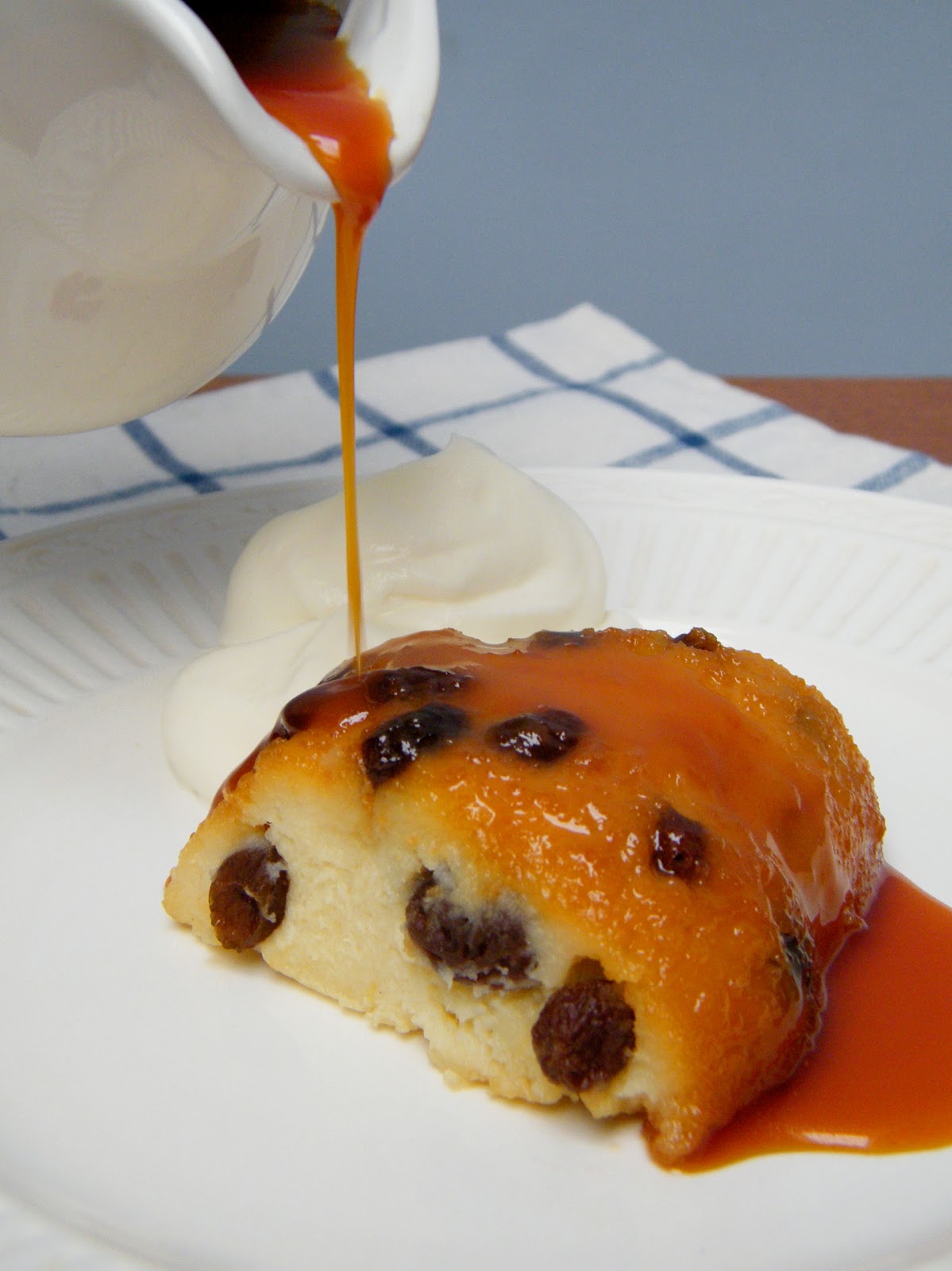
A few weeks ago Katie -author of Seashells and Sunflowers- launched an Argentine Recipe Contest on her blog and I decided to enter with a recipe for budín de pan al caramelo, a dessert that is quite popular in Argentinean cooking and which I have been making quite often since I moved to The Netherlands, especially when I feel a bit homesick... Well, it seems that Katie liked the recipe and decided to choose it as a finalist for the contest!! 

Reading her post and looking at the photos of her version of the budín made think of the journey this recipe has made: I brought it to The Netherlands when I came from Argentina for love; and it has now made the journey back to its place of origin where American expat Katie moved some time ago, also for love!

For those of you who were looking forward to reading the recipe for budín de pan when I posted about the  Argies in Dutchland food parties, here is the link to Katie's post about the bread pudding she made with the recipe I sent her for the contest.


Photo ©katiemetz

Thursday, 5 May 2011

Spotted in The Netherlands: tulip fields on the Northeast Polder

(haciendo clic aquí puedes leer la versión en español)
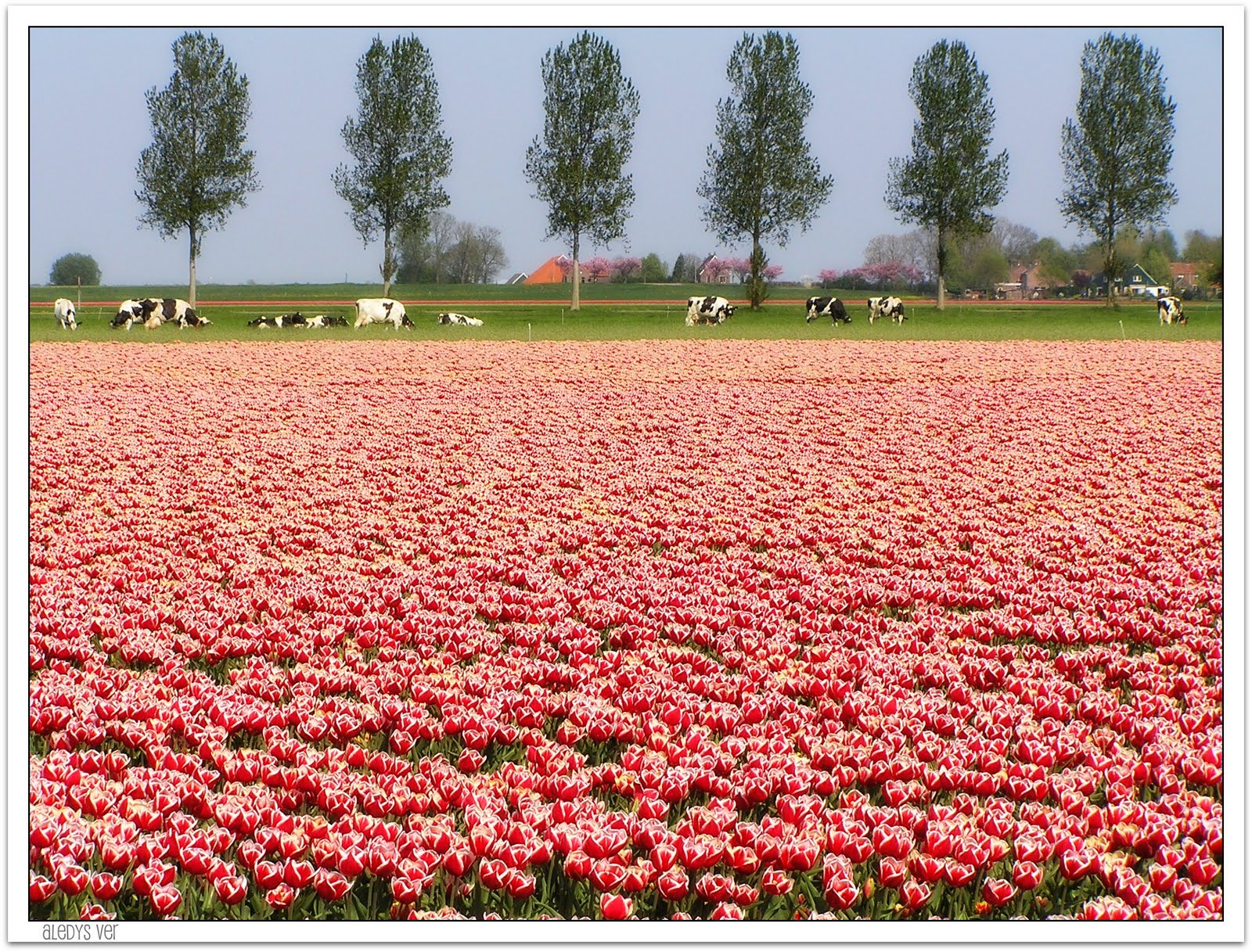
Tulips from the Noordoostpolder in the province of Flevoland.
 At this time of the year in Holland the fields are transformed into a spectacular display of colour: it is the tulip season! In the months of April and May 10.000 hectares across The Netherlands burst with the colours of approximately 3 billion tulips in bloom and the landscape looks like a giant caleidoscope of spring beauty.


Tulips are considered a symbol of The Netherlands all over the world and every year thousands of tourists visit the country to admire the bulbs in full bloom during the spring months. The Keukenhof - the largest flower garden in the world situated not far from Amsterdam - alone receives 800,000 visitors per year attracted by the popular tulips.

Typical Dutch landscape on the Northeast Polder, near Blankenham.
However, the largest cultivated areas are not located in the west (North or South Holland) but in the Noordoostpolder (northeast polder) in the province of Flevoland with 2,000 hectares of bulb fields.

A red sea of tulips, near Bant, in the Noordoostpolder.
Last Saturday during our trip from Zwolle to the club where my husband practices clay pigeon shooting every week, we made several stops and detours on the way to admire the beautiful landscape and take some photographs. We were not the only ones: lots of people in cars, on bikes, on foot, were following the bulb route [bollenroute] in Flevoland and enjoying a warm sunny day.

A farm house in Blankenham, Noordoostpolder.
If you are interested in exploring the youngest province in the country and seeing what Flevoland has to offer, you can visit the VVV website here: Ook Flevoland. Also, the VVV office in the Noordoostpolder has information about local events and attractions: VVV Noordoostpolder; and from this website, you can get more information about the Tulpenfestival there and download the tulpenroute for your GPS or print it if you want.

Endless sea of tulips on the Noordoostpolder, near Luttelgeest.

A tulip field in the Noordoostpolder, Flevoland.

Monday, 18 April 2011

Presépio goes Argie in a sip!

(si prefieres leer este post en español, por favor sigue este enlace)

A few days ago my friend Sandra (author of the blog, "Presépio com Vista para o Canal") came to Zwolle for a visit. The plan was to have a lazy lunch and walk around town a little. Since we were having a spell of nice weather with lots of sun and clear sky, I thought it would be a good idea to sit somewhere nice near the water in the city centre and have a bit of a picnic.

Sandra is always very receptive and enthusiastic about discovering traditions and habits from other parts of the world, so I came up with a little surprise for her. Before leaving the house, I boiled some water and poured it into a thermos flask I brought from Argentina. What surprise did I have in mind? Well, pouring Sandra some mates, of course!
Pouring "mates" for friends.
Mate (pronounced MAH-teh, stressing the first syllable, not the last as I see it written everywhere)  is Argentina's national drink, but it is not just any drink, something you pour when you are thirsty and then forget about. Mate is for an Argentine his or her best friend when he or she is at home alone studying, working or relaxing. Preparing the mate, pouring it, holding the gourd in your hand, sipping it slowly - the whole ritual is comforting and it gives an immediate sense of well being that, originating in your brain, spreads then through your body.
My collection of mate gourds from Argentina.
But mate is the drink you serve when you are entertaining at home, always the first thing you offer and is accepted by your guests. Also, if you are off to spend the day at the beach or by the pool, the mate gear is the first thing that you want to pack and God may help you if, upon arriving at your destination, you discover you have forgotten to take it with you! You will be despised and blamed by your companions relentlessly - for about five whole minutes!

Because mate is such an important part of our everyday lives back in Argentina, I thought that Sandra would be interested in tasting it and hearing all about it. In order to  prepare and pour this infusion you need a bit of equipment: the thermos flask for the hot water, the yerba mate or dry leaves to be brewed, some sugar, the gourd to pour it in (also called mate) and the metal filter straw. You can also add other herbs to the mate or even orange or lemon peel to give it a citrus flavour.
The raw gourds waiting to be carved and polished to be used to pour mates.
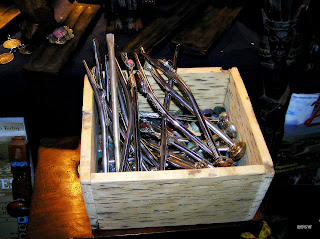
The metal straws wih filters, used to sip the mates from the gourd.
Once I had collected and prepared all these elements, I had to put them somewhere to transport them safely. And that is when my mysterious magic leather case came  in handy. In Argentina you can find special cases made for the sole purpose of carrying the mate implements, and last year during my holiday in Argentina, I bought a very nice one made from carpincho or capibara skin.

My carpincho leather case to transport the mate equipment. Photo by Sandra.
When Sandra saw my fancy case, she immediately got curious but I was determined not to give away what was in it until the moment was right. After lunch in "La Meridiana", an Italian restaurant on the Melkmarkt, opposite the Grote Kerk (Big Church), we took a walk around and I took her to see the Zwolse Balletjeshuis, where they sell these special, old fashioned sweets typical of Zwolle. Unfortunately it was closed, but we managed to find some balletjes at the Tourist Information Office or VVV right next to the Grote Kerk.
Finally, the moment to open the mysterious leather case arrived. We sat by the canal, I opened the case, took the thermos out -nothing odd there, maybe it was coffee? tea? spirits?- and then out came the tumbler containing the dried leaves of yerba mate and I started preparing the drink. First I took the gourd, filled 3/4 of it with the yerba, then shook it a bit to make the loose powder to go to the surface and avoid them from going through the sieve and drinking them. Then I placed the metal filter straw to one side and I also added a pinch of peppermint leaves to give it more taste. Instead of sugar I normally use sweetener so I added some of that and then poured the hot water. The first mate is always for the cebador (the person pouring it) to make sure it is prepared correctly, so I had the first one and I made sure it was ok. Then, I poured again and passed it to Sandra. What did Sandra think of it?

Well, I am sure that it tasted quite strange to her, probably! Drinking mate is an acquired taste and the first few sips or the first few rounds of mate will definitely taste a bit too strong and probably bitter, We, Argentines, drink it normally from an early age and some of us don't even get to really like it, but because it is usually done socially, we always join in the mate circles while spending time with friends or family.
Rosario, a friend's daughter, is not yet 3 years old and she already drinks mates as an expert!
I can go on and on talking about mate drinking since the ritual has its own etiquette and the manner of preparing and pouring it varies from region to region. It also has a number of health benefits, since it is an excellent anti-oxidant, protects the inmune system and is an energy booster.

I am not sure what Sandra thought of those first sips of mate, but I do know that she was rather impressed with the ritual and the health benefits that yerba mate offers. So, guess what I am giving her for her birthday?

Packets of different types of yerba mate.

Thank you, Sandra, for posting this article about mate and your visit in your blog and for letting me use your photo of the "magic case"!

Tuesday, 12 April 2011

Elena's Carbonada criolla (pumpkin beef stew)

(Para leer en español, sigue este enlace)

In my last blog entry I presented a ritual that my Argentinean friends Elena, Mónica and I started a while ago: all three families spending a day together, cooking and eating Argentinean food. Today, Elena is sharing with us her recipe for one of the dishes that she prepared for our first Argies in Dutchland party: the carbonada criolla, or pumpkin beef stew.

Elena pouring mates (the Argentinean national drink) for her guests.
 While I was doing some research about this traditional Argentinean dish, I was surprised to know that its origin is in fact, Belgian. I had always thought that carbonada criolla was one of the dishes that could be traced back to the colonial times of our history, a dish Spanish in origin that had been adopted by the criollos (the people of Spanish descent who were born in the colony) and changed to include some of the local ingredients available.

Instead, it seems that the carbonada criolla hails originally from Belgium where it is known as carbonade or more specifically, carbonade flamande which is, "a sweet-sour beef and onion stew made with beer and seasoned with thyme and bay." (source, Wikipedia) Interesting how this dish started its journey not too far from where we, the argies in the team, are living right now!

 Besides this unexpected discovery, I found that the name carbonada refers to the cooking method: the stew was or is cooked traditionally on a pot over the flame very slowly until all the logs in the open stove are reduced to ashes, which in Spanish is carbonizados. Then the criolla part of the name, refers to the indigenous ingredients that were added by the locals -the criollos- like the corn on the cob, the pumpkin and the fruit. The pumpkin shell is sometimes used to serve the dish.

Carbonada criolla served in the pumpkin shell. Photo courtesy of Recetario Cocina
Here is the recipe of this hearty traditional Argentinean dish. If you are now located in the northern hemisphere you might want to wait until the autumn or winter to try it since it is a rather hearty dish; but trust me, you will love it! 

Carbonada Criolla for the Argies in Dutchland, by Elena:

Heat some oil in a pan and brown two cloves of garlic and a finely chopped onion for a few minutes until soft. Add a pound (1/2 kg.) of steweing beef cut in small cubes and seal it in the garlic and onion before adding two peeled tomatoes chopped, 100g. of butter and a bunch of fresh herbs, one potato, a chunk of pumpkin, and another of sweet potato, all cubed; then some pieces of corn still on the cob, three ladelfulls of stock. Season with salt and pepper.
Put the lid on the pan and let it boil  until everything is tender. Add then 250g of rice, one peeled apple cubed, three peeled peaches also cubed (it can also be whole small peaches, always peeled). Cook on a low flame until the rice is cooked, which should be about 20 minutes.
Add more stock if necessary, but bear in mind that the carbonada should have the consistency of a broth.
This dish tastes better when its made on the same day, since it will get too mushy if you prepare it the day before.

Elena's delicious carbonada, served on the beautiful dishes she brought over from Argentina.

The recipe was taken from El Libro de Doña Petrona, a book containing the recipes of the "guru" of Argentinean cooking: Petrona C. de Gandulfo.

Thursday, 7 April 2011

Argies in Dutchland: doing what we know best

 (si prefieres leer este artículo en español, por favor sigue este enlace)

And what is that Argies do best, you may ask? Play football, dance the tango, run a country efficiently? (Allow me a little sarcasm here!) Well no, I was rather talking about having a good time with friends around food - good food and a lot of it, to be more exact.


I am sure that in many cultures and many countries people enjoy getting together, having a good time and eating good food. Inviting people over and treating guests to a home-cooked meal is not a habit exclusively practiced by us, Argies. While abroad, I have been to the homes of many people od different nationalities where I have been made to feel at home, served excellent food and been treated like royalty.

However, if you are an expat, I am sure you will agree with me that one sometimes yearns for the company of people who are just like you, who enjoy the same things, share your background, speak the same language in the same way and, most of all, miss the same things from back home, especially food. This is why with my Argentinean expat friends Mónica and Elena, we get together a couple of times a year to enjoy a true Argie feast which normally involves a lot of cooking, a lot of eating and a lot of talking and relaxing, too.
The Argie "team": Elena, Mónica and myself.
From the moment we mention a possible date for the meet-up, we start making suggestions of dishes from back home which we would like to see on the menu of the day. Because Argentina is mainly a country of immigrants, our favourite dishes normally include not only traditional dishes which originated in colonial times or with a more native Latin American flavour, like the locro Mónica made the last time or the carbonada criolla that Elena made for our first Argies in Holland party; but also dishes that were brought over from Europe by our grandparents or parents, dishes that we regularly cook at home on weekends for the family or friends -like Monica's delicious canelones or the ravioles I made when I hosted the meeting in my house last year.

Since many of the regulars here on this blog are interested in food, I thought it was a good idea to share some of the recipes of the Argentinean classics that we have cooked so far for our parties. Mónica and Elena have both kindly agreed to provide the recipes and if you have any questions about the dishes or Argentinean food in general, we will be very happy to answer them.

A word of warning though: our dishes normally include meat, so those of you who are vegetarians can skip the main dishes or try to adapt them to your taste (like the locro) or wait for the recipes of our desserts and pastry.

For our first "Argies in Dutchland" party the menu included:

Elena's Carbonada Criolla
(beef stew with pumpkin, veggies and fruit)


Mónica's Cazuela de Pollo
(chicken casserole)


Aledys' Budín de Pan al Caramelo
(bread pudding with caramel sauce)

Elena's Alfajores de Maicena
( dulce de leche sandwich shortbread biscuits)

Mónica's torta rápida de chocolate
(fast chocolate cake)

In the next blog post Elena will share with us her recipes for the carbonada criolla - a hearty country dish with an interesting background -  and the alfajores de maicena, the delicious sandwich biscuits filled with the ever-present dulce de leche... Now go and work up some appetite for the next blog entry!